

 Product Overview
  Enterprise Package
  Integrations
  Security
  Hardware
  FAQ
FAQ 
 How Evocon Works
  OEE Monitoring
  Downtime Tracking
  Manufacturing Data Collection
  Production Monitoring
  Continuous Improvement
  Quality Control
 Learn
Learn  Case Studies
  Reports and Tools
  OEE Fundamentals
  Increasing Productivity
  Sustainability in Manufacturing
 The 5-Day Guide to Launch OEE Monitoring in 2026
 OEE Calculator
  ROI Calculator
  OEE Excel Template
  Evocon
  Contact
  Join us
  Sign in
 Back to main menu
AIP (Advanced Industries Packaging), a major producer of paper packaging, needed a way to track production and get accurate data across its factories in Europe. Implementing a system that enabled them to view the same data across sites and benchmark performance was essential.
To understand how they discovered and implemented production monitoring software, we spoke with Marc Visser, from the Operations Excellence Team at AIP, and Mikkel Smith, Evocon Authorised Partner at Flexkom. They share their insights on the challenges of managing production across borders, how they keep every level of the organization on the same page, and how they saved two full workdays per month for administrators who previously handled manual data entry.
What AIP Needed in a Solution
Similar to many manufacturers, AIP has been tracking production manually for years. This was a manual, time-consuming process, where operators logged machine downtime and issues on paper sheets, which were then transferred to Excel, and finally converted to reports for analysis. Additionally, as they have facilities across the Netherlands, Germany, Denmark, the Czech Republic, and Romania, they wanted a solution that could provide them with accurate, similar data across their operations.
What Do They Measure? The Difficulties With OEE and “OEE Max”
AIP uses OEE (Overall Equipment Effectiveness) as its primary KPI for production. However, they realized that a single target couldn’t serve two different functions: the shop floor and senior management. To solve this, they implemented a two-tier data strategy.
- Standard OEE
For the shop floor, AIP uses standard OEE based on realistic targets that account for current material conditions (e.g., dimensions, composition, and complex prints). By setting targets that account for these real-world constraints, AIP ensures that the OEE dashboard remains a tool for motivation. Operators are measured against what is actually possible today, keeping morale high and making sure everyone sees what is happening. - “OEE Max”
In contrast, AIP’s headquarters required an “OEE Max” view. This metric focuses on the theoretical maximum capacity set by the machine supplier (e.g., 330 pieces per minute), rather than local conditions.
While this target is practically impossible to achieve daily, it provides an objective baseline for high-level comparison across borders.
“OEE Max is based on the maximum capacity of the machine. If you want to compare factories and the output of machinery, you want to see it at the machine’s maximum capacity. If you do poor maintenance on a machine and you put your targets lower because it’s not in optimal condition, OEE will still show a good number because you lowered your targets. But OEE Max will show you’re going down.”
Marc Visser, Operations Excellence, AIP
Global Challenges
When operating in multiple countries, it can be difficult to keep all of your data in sync. This was a challenge for AIP, with sites across 5 countries. As well as data, there can often be issues of “silos”, where each geographic location operates independently, and has its own ways of working, culture, and expectations.
The benefit is the ability to share best practices, and when you find a tool that works, you can recommend it to other locations.
Implementation and Rollout
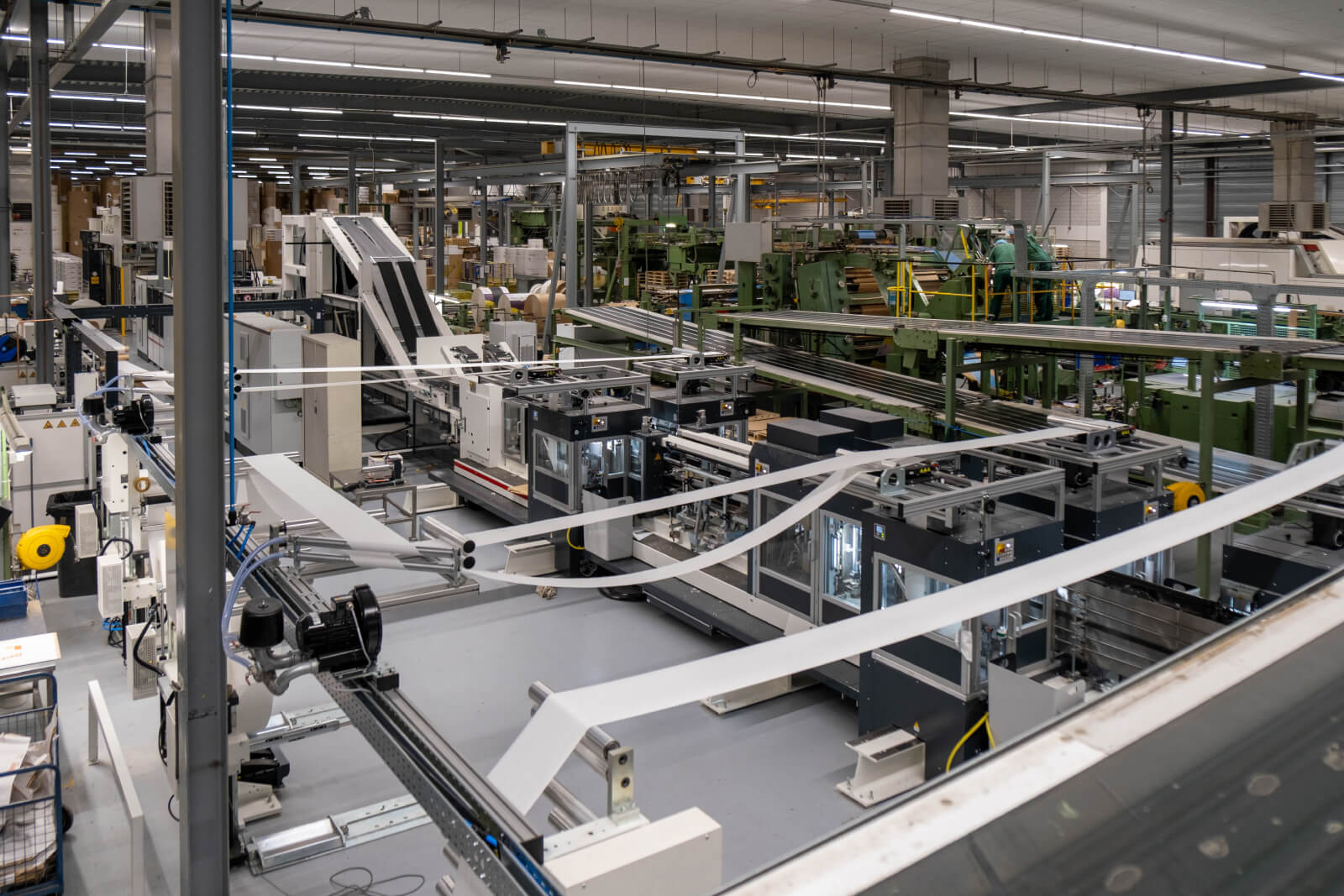
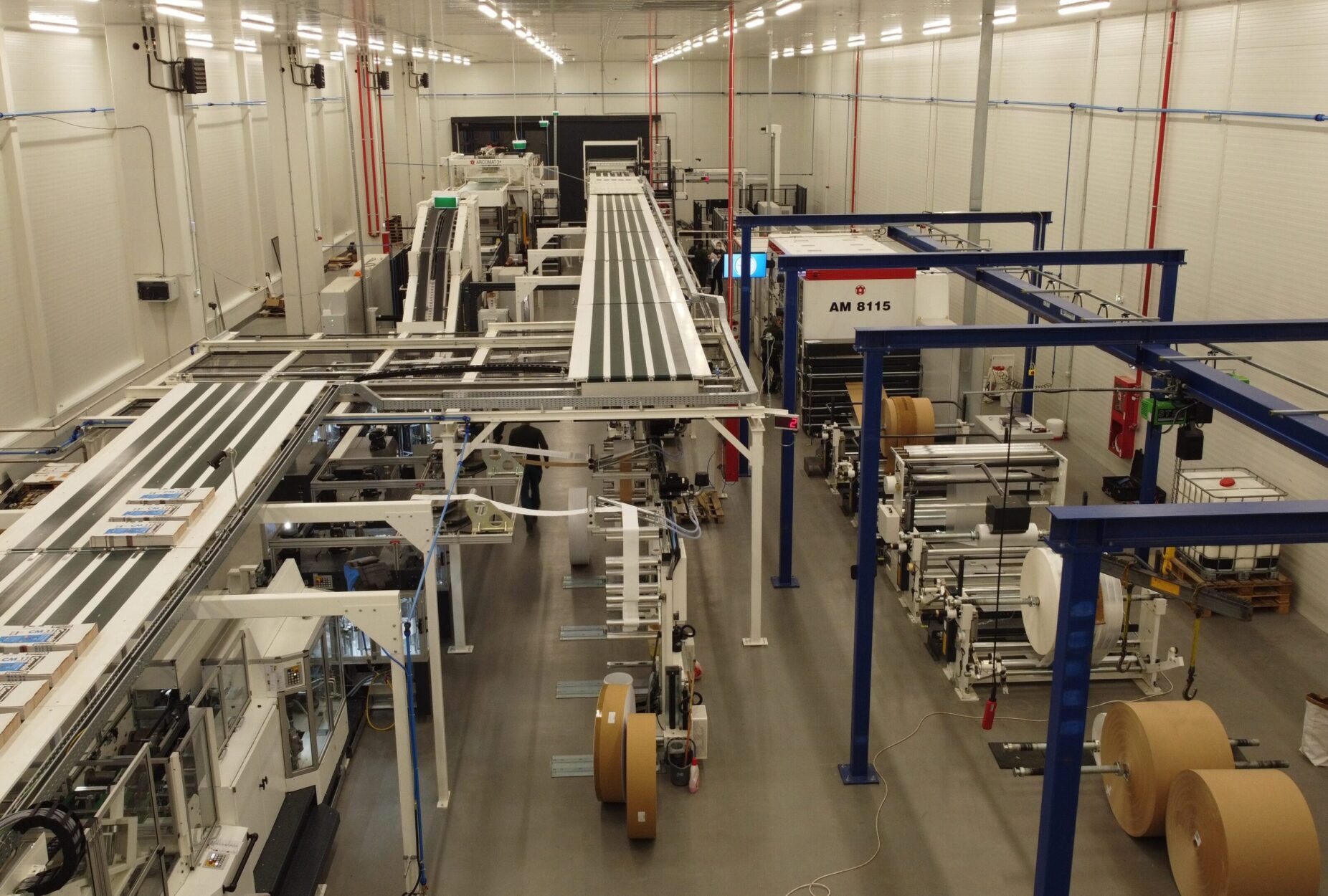
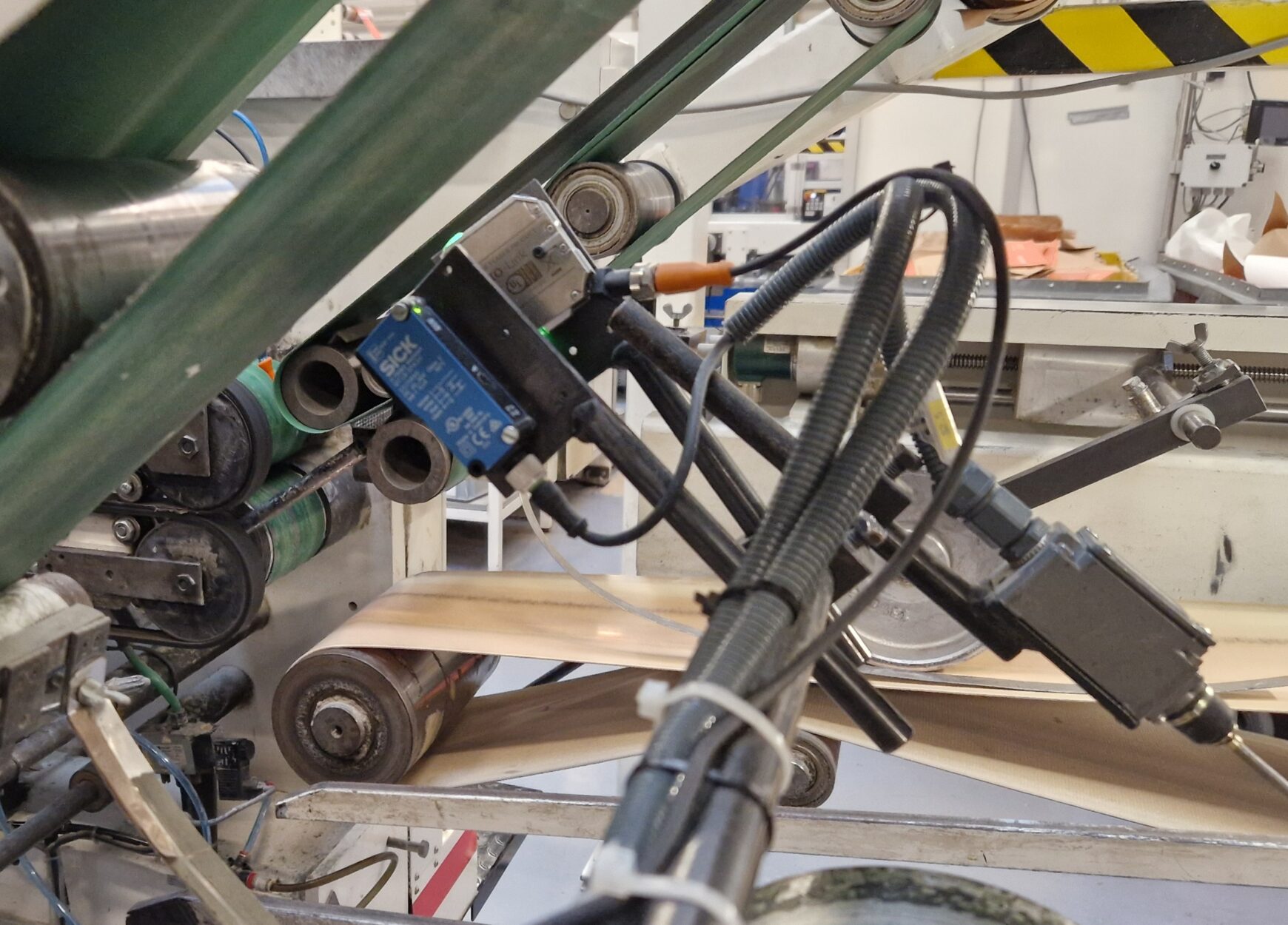
AIP’s journey with Evocon began in early 2024 at the plant in Aalborg, Denmark. The initial implementation was a pilot used as a proof of concept, showing how quickly the system could be adopted on the shop floor. Following a successful trial period of just one to two months, the decision was made to extend the rollout to the group’s main production lines. By September 2024, the implementation gained momentum, expanding to include:
- The Netherlands: Where the system was integrated into all production machinery to replace manual data entry.
- Romania: A location that saw an immediate impact, moving from paper-based reporting to real-time digital monitoring.
- Germany: Where the plant leadership was convinced by the rapid success seen in the Danish and Dutch facilities.
The rollout strategy focused on AIP’s main machines — the most critical lines — starting to ensure that the core of AIP’s production was comparable across all territories. Marc Visser, responsible for the group-level rollout, highlights the ease of this expansion:
“It was a very fast implementation… we finalized most machinery reporting around September.”
Marc Visser, Operations Excellence, AIP
Following the success of the first four plants, AIP is currently onboarding its Czech facility.
Overcoming the “Silo” Mentality: The Taskforce
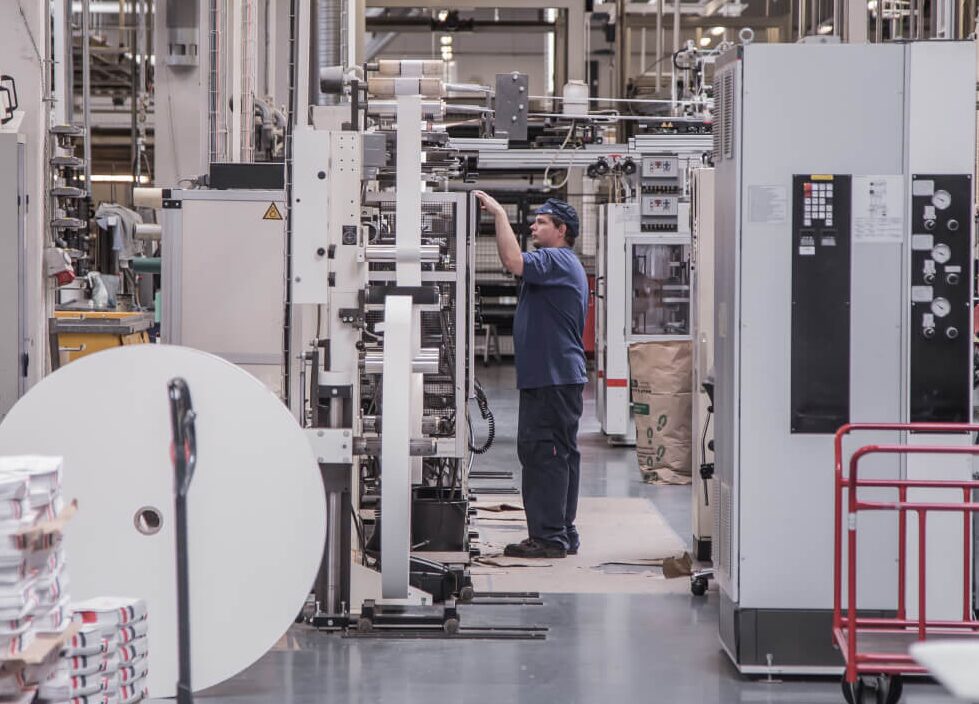
To keep the rollout consistent across locations, AIP established a cross-border task force. This group, consisting of factory administrators from each country, ensures that “stop reasons” and “setup times” are synchronized. Agreeing on the same data across locations, AIP has moved from isolated silos to an environment where a plant manager in Romania can benchmark their performance directly against a peer in the Netherlands.
Partnership Support
The rollout was especially successful thanks to the partnership between AIP’s team and Mikkel Smith, Evocon’s authorized partner from Flexkom, who specializes in operational excellence. This partnership proved vital when promoting the tool and getting plant managers on board.
While headquarters often pushes for top-down implementation, Mikkel and Marc made sure to keep some focus on local motivation. When certain plants were hesitant, they used live demonstrations and training sessions to show — not just tell — the benefits.
“It’s a fine balance between headquarters pushing and respecting each factory. Each factory has a local management that has to be motivated and not just forced.”
Mikkel Smith, Flexkom.
This approach helped gain local favor for the system. In one instance, a veteran operator with over 25 years of experience at the company told Mikkel that Evocon was “the best thing that has happened” in his entire career.
By giving operators a way to objectively clarify what happened during a shift, the system helped the operators prove the issues they were experiencing on the shop floor.
The Results
With Evocon in place, AIP was able to pull both live OEE data and the ‘OEE Max’ figures the group needed for cross-site comparison.
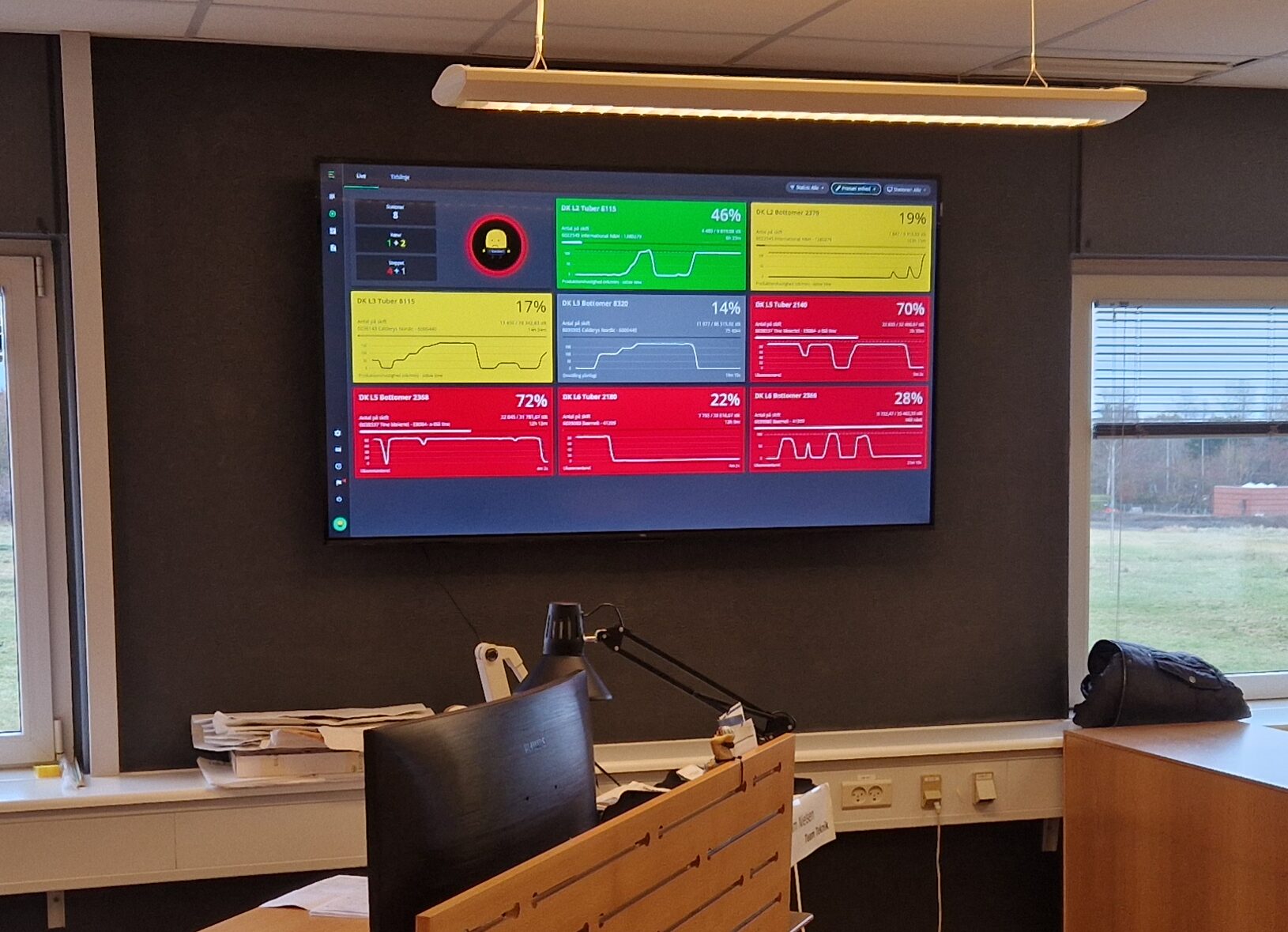
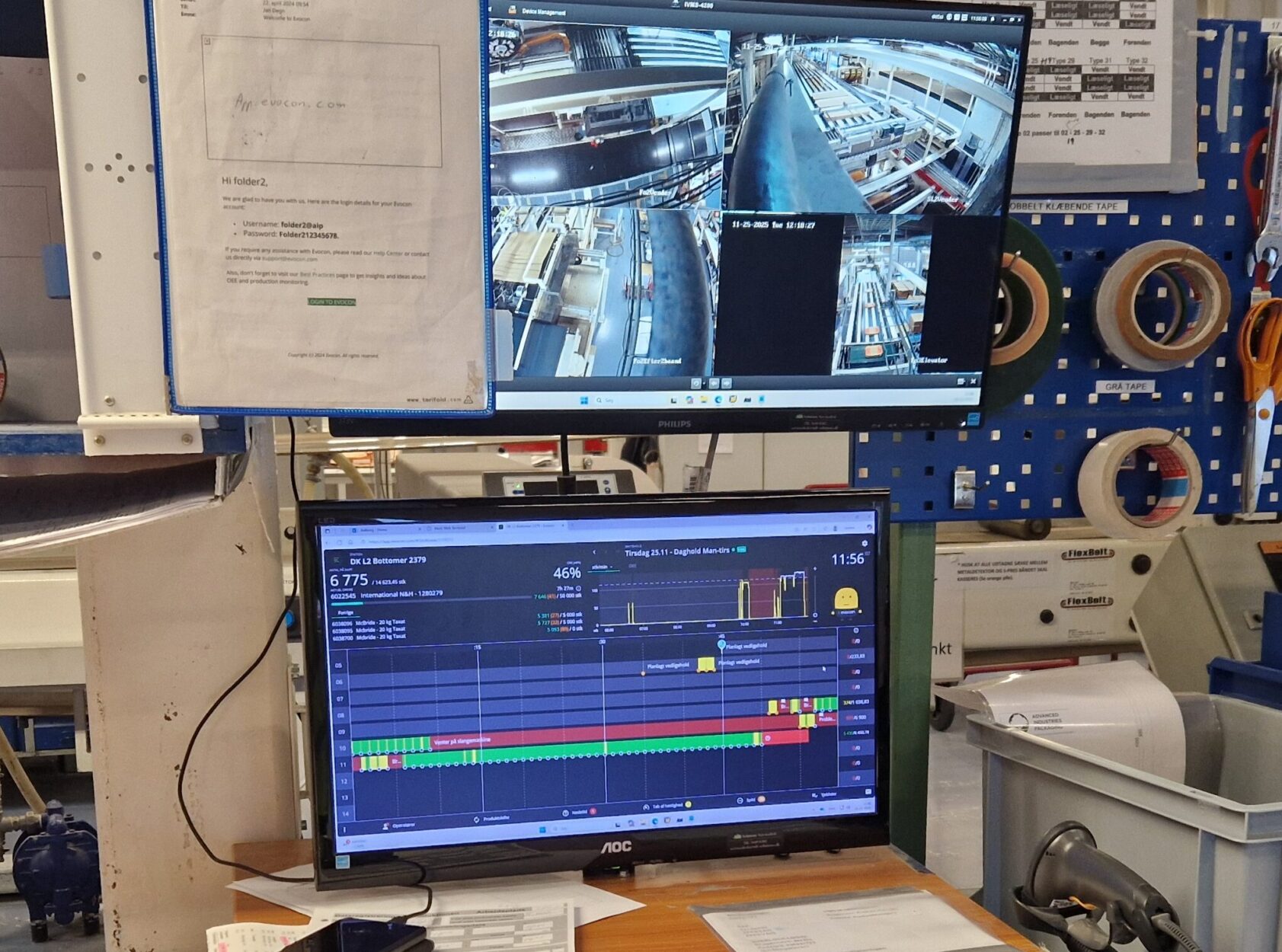
Using Evocon’s API, Marc integrated Evocon data with custom Excel tools, and he created a “Benchmark Report” that automatically calculates capacity utilization across the entire group. Evocon data and the Excel integration brought a number of benefits:
- Time Savings
The automation of benchmark reports saves approximately half a day per month, per plant. Across the four active plants, this saves the company two full workdays every month. - Accuracy Over Opinions
Daily meetings in plants like Romania now revolve around a big screen showing live Evocon data. Instead of listening to stories or opinions about why a shift was slow, managers and operators look at objective speed and stop data to find solutions. - Knowledge Sharing
Benchmarking immediately revealed that some factories handled setups more efficiently than others. The task force now uses this data to share best practices, such as how to join stops during complex setups to ensure statistics remain accurate.
For example, the Romanian plant took the lead in using Checklists within Evocon. Seeing the success in Romania, the task force is now moving to implement Checklists across the other three plants. - Improved Customer Relations
With an accurate record of every stop and speed change, AIP can now use data to clarify customer complaints related to specific production runs.
“The biggest benefit is that we can now clearly see production speeds over time. This helps us better understand where challenges occur and act on them more effectively. Combined with the experience and feedback from our teams, this information becomes a key driver for improvement — allowing us to make more informed decisions and continuously optimize our processes.”
Marc Visser, Operations Excellence, AIP
Looking Ahead
Based on the results they have seen so far and their ability to record “OEE Max”, AIP plans to further expand Evocon’s use across the company. With the Netherlands, Romania, Germany, and Denmark now using Evocon, AIP is looking to its next implementation location: the Czech Republic. The goal is to eventually have the entire group synchronized, replacing paper-based shift reports with real-time digital dashboards.
Key Takeaways
By starting in a single plant in Denmark and showcasing the results, AIP built the internal credibility needed to expand Evocon usage quickly — reaching four countries within months, with more to follow.
AIP’s cross-border task force ensured that stop reasons and setup definitions had the same meaning in Romania as in the Netherlands, and led to more knowledge sharing across the organization.
The concept of “OEE Max” can help any multi-site operation: standard performance metrics can be tampered with, consciously or not, by adjusting targets to match current conditions. Adding a fixed theoretical benchmark alongside a realistic one gives leadership a more complete and honest picture of where each facility truly stands.
The implementation of any new tool can stall if local teams feel it’s being imposed on them rather than offered to them. Taking the time to demonstrate value to individual plants — and listening to operators rather than just instructing them — made the difference between resistance and enthusiasm.


